
热门搜索: 伪娘
舞林大会
First regular Arctic container service China-Europe Arctic Express set to debut this week, ship operator tells GT_我的网站

A |
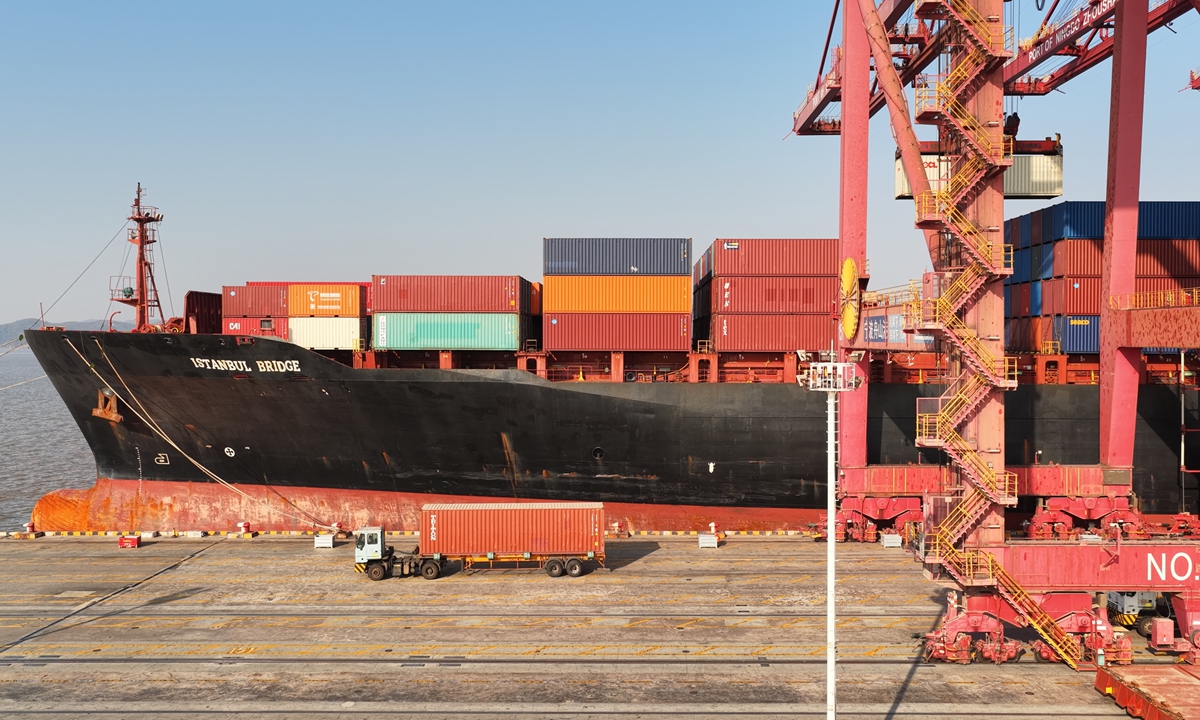
A Chinese shipping company has confirmed with the Global Times the plan to launch a regular container service via Russia's Northern Sea Route to Europe this week, marking a new Arctic option for Asia-Europe trade once it sets sail.
Chinese container shipping company Sea Legend Shipping told the Global Times on Tuesday that its vessel Dubai Tower, originally scheduled to depart Ningbo-Zhoushan Port in East China's Zhejiang Province, on August 15, has had its departure adjusted because of weather conditions. The company said it is making internal arrangements for the maiden voyage of the China-Europe Arctic Express Route.
According to industry observers, the move reflects growing interest in Arctic shipping as global logistics networks continue to diversify beyond traditional canal routes. As polar ice retreats and seasonal navigation windows widen, the Arctic is emerging as a practical alternative for some Asia-Europe shipments, particularly those seeking to avoid congested or geopolitically sensitive sea lanes.
On Monday, the Financial Times reported that Sea Legend would launch the first regular container shipping service through the Arctic this week. The report said the company has branded the service the "Ice Silk Road," a reference to the historical Silk Road linking China and Europe.
The move comes as Arctic shipping increases amid rapidly shrinking sea ice. The Northern Sea Route recorded a record 23 transits last summer, up from 15 in 2024, according to figures cited by the FT.
Sea Legend told the Global Times that, compared with traditional China-Europe routes that can take around 40 days, the Arctic passage could cut transit time by nearly half, reducing the journey to about 20 days under direct service conditions.
The inaugural voyage is expected to call at Qingdao Port, Shanghai Port, Taicang Port and Ningbo-Zhoushan Port in China before continuing to European ports including Teesport and Felixstowe in the UK, Hamburg in Germany and Gdynia in Poland. The final domestic calling sequence may still change due to typhoon-related weather conditions.
The service will carry cargo including energy storage containers and related components, power batteries and new energy vehicles - goods that typically require faster transit, stable schedules and controlled transport conditions.
Sea Legend said the Arctic route could offer exporters a new solution in terms of both speed and reliability, as traditional canal and mainline routes face growing uncertainty from congestion, geopolitical disruptions and longer port waiting times.
The company also said the route has cooperation agreements with destination terminals including Felixstowe, Rotterdam, Wilhelmshaven and Antwerp, giving vessels priority berthing and a "green channel" advantage that could reduce anchorage delays and logistics costs.
Zhong Zhechao, an international logistics service expert told the Global Times on Tuesday that the move highlights rising interest in using the Arctic region for shipping, with Arctic shipping gradually becoming a practical alternative in the global logistics network as melting ice expands seasonal navigation windows and shipping lines seek to avoid congested and geopolitically sensitive sea lanes.
For exporters - especially cross-border e-commerce firms, manufacturers of seasonal products, and new energy companies - shorter shipping times could ease inventory pressure and reduce working-capital costs by allowing more flexible production and sales planning.
Zhong said this may be particularly valuable for companies racing to meet European sales seasons, as shorter transit times improve responsiveness to overseas demand.
The company also said the Arctic's low-temperature environment may be especially suitable for transporting new energy products such as batteries and energy storage systems, which require heightened attention to safety and thermal-risk considerations during transit.
Looking ahead, Sea Legend aims to achieve roughly four months of stable annual operation within the next three to five years, with a longer-term goal of year-round Arctic navigation within five to ten years.
The launch underscores how Chinese shipping firms are accelerating their Arctic deployment, turning what was once a long-term vision into operational reality.
According to the Xinhua News Agency, in September 2025, Ningbo-Zhoushan Port launched its first China-Europe Arctic container express route. The move was expected to provide strong support for trade enterprises to expand into new international logistics channels, the port said.
In recent years, Arctic shipping routes have increasingly come under the spotlight in the international community and have the potential to become important routes in international trade, Lin Jian, Chinese Foreign Ministry spokesperson, told a press conference in September 2025.
China stands ready to work with Russia and other Arctic states as well as interested countries to strengthen international cooperation on the building and operation of basic infrastructure along Arctic shipping routes and jointly advance the development and exploration of the routes and protect the environment there, Lin said.
。
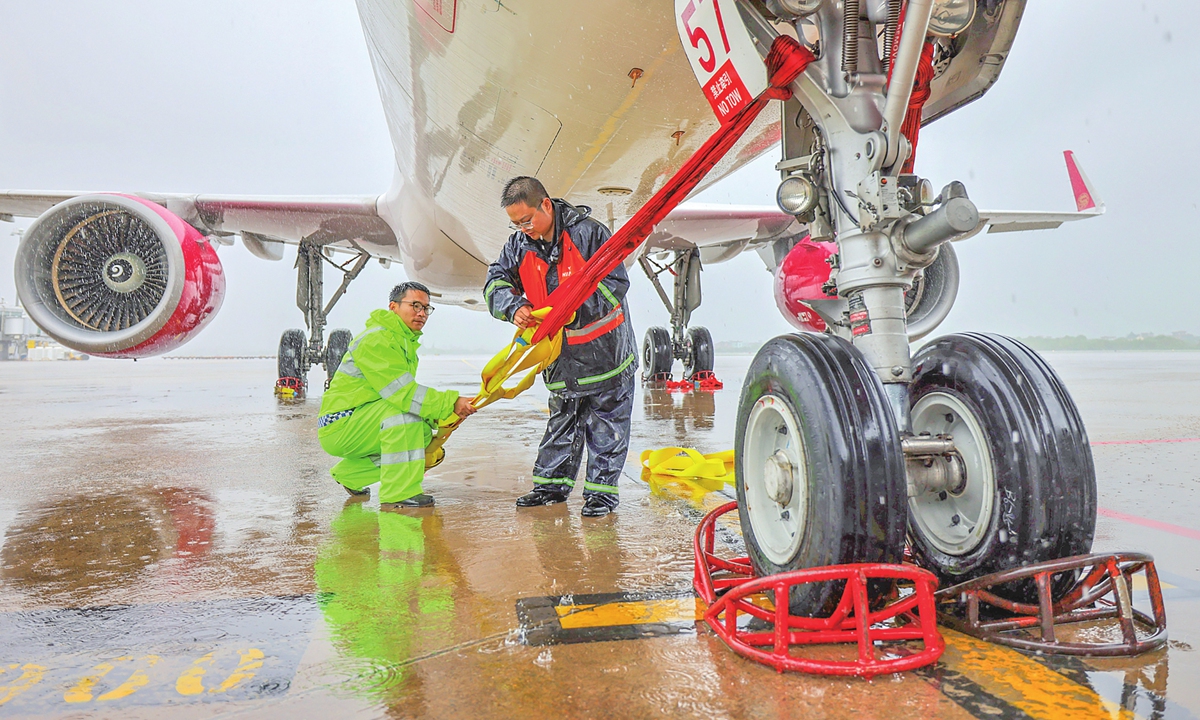
Typhoon Dolphin made landfall in Taizhou, East China's Zhejiang Province, on Sunday afternoon, bringing strong winds up to 42 meters per second and heavy torrential rain to the coastal regions amid a red alert - the highest level in the country's typhoon warning system - issued for it earlier that day.
Authorities in East China's Fujian have relocated nearly 100,000 residents, while coastal provinces are suspending railway services and canceled flights, making an all-out effort to mitigate possible risks.
The NMC maintained orange rainstorm and blue severe convective weather alerts at 6 am on Sunday, forecasting exceptionally heavy rainfall of 250 to 440 millimeters in some areas along the eastern coast of Zhejiang, with heavy to torrential rains expected across Jiangsu, Zhejiang, Shanghai, and Anhui between Sunday morning and Monday morning, China Central Television (CCTV) reported.
In response to the typhoon, China's meteorological authority on Sunday upgraded its emergency response for severe meteorological disasters from Level III to Level II.
Fujian raised the emergency response level for typhoon prevention to Level II at 9 am on Sunday.
As Typhoon Dolphin gathers strength and approaches the coastal areas, Fujian's flood control authority, as of 6 pm on Saturday, deployed a total of 17,800 officials to and relocated 98,900 people from high-risk areas, Xinhua News Agency reported on Saturday.
Fujian has suspended all 115 marine engineering projects and moved 290 construction vessels to safe waters, while 55 passenger ferry routes in affected waters have been halted, chinanews.com reported.
Meanwhile, railway services in the affected regions including Fujian, Zhejiang, Shanghai have also been suspended from Sunday to Monday, according to chinanews.com.
Fujian authorities have urged stronger safety measures for returning vessels, offshore platforms and coastal and island tourism, as well as reinforcement of aquaculture facilities. They also called for timely evacuations from flood- and landslide-prone areas to guard against secondary disasters from the typhoon and heavy rain, chinanews.com reported.
In Zhejiang, Wenzhou city has closed all 85 A-level national tourist attractions, turned away more than 7,400 visitors and evacuated over 1,600, with the relocation effort ongoing, according to CCTV. Next, Wenzhou will next implement a "five suspensions" policy, halting outdoor group activities, classes, work, business operations and transportation.
All fishing vessels at Shitang Fishing Port in Wenling, Zhejiang, have returned to port, with all personnel evacuated ashore and maritime rescue teams on standby. Authorities urged vessels to stay off the sea during the typhoon.
In Shanghai, Pudong and Hongqiao airports operated at reduced capacity on Sunday, with nearly 60 percent of flights canceled. A total of 1,384 flights are scheduled to be canceled including 871 at Pudong and 513 at Hongqiao. Passengers are advised to check with their airlines for the latest updates and adjust travel plans accordingly, according to CCTV.
According to Hu Xiao, meteorological analyst at the NMC, the typhoon has several notable features, including its strong intensity and expansive circulation. The typhoon also has several unusual features. Forming unusually far east, near 180°E, it has traveled more than 7,200 kilometers, making its potential landfall in China a rare event and possibly the easternmost such landfall since 1951. Its 12-day lifespan is also well above the typical seven-to-10-day average, CCTV reported.
According to Ma Jun, director of the Institute of Public and Environmental Affairs, Typhoon Dolphin traveled a long distance and remained at typhoon or severe typhoon strength of its lifespan so far. Despite passing through some areas that were unfavorable to its development, its powerful inner core remained intact, while its extensive cloud system continued to absorb moisture and energy, fueling the potential for torrential rainfall.
The typhoon has remained at sea for more than 260 hours and experienced a rare "three rises and three falls" in intensity. Its unusually long lifespan has allowed it to absorb more moisture and energy, while repeated intensity fluctuations have complicated forecasts of its future track and intensity of wind and rainfall, according to CCTV.
After landfall, Typhoon Dolphin may move slowly, prolonging heavy rainfall and raising the risk of extreme precipitation and related disasters. Its track later in the week remains uncertain as it could interact with the southwest monsoon and cold air from the northwest, potentially broadening and intensifying its impacts, Ma told the Global Times on Sunday.
。

B |
Current article:http://nicbdkg.zhouangnaoguangsundianzhenmou.cfd/m1kqwf/20260826/4345.html
Published on:00:11:10
栏目相关
- 东风日产奇骏·荣誉真心版将于7月2日上市
- “易中天”,集体大跌,“易中天”,集体大跌
- From community renewal to sustainable transit: two Latin American scholars draw on the people-centered planning embedded in China’s urban development
- 蒂格:字母哥难达巴特勒热火成就 东部今非昔比
- 《剑星》伊芙魔术礼服MOD
- Prominent German leftist to launch new party that could eat into far-right's support
- 奥迪联手供应商研发出可收集周边环境颗粒物的前端空气过滤器
- 道路交通安全法修订草案提请审议 涉及自动驾驶、电动车限速等
- 可超万兆内存!七彩虹推出X870E火神白主板:双USB4 售3999元
- 厦航新开两条国际航线 9月可直飞伦敦和沙巴
- 跨境电商必看:主域名和子域名的区别
- 2026中国小篮球全国总决赛圆满收官,安踏儿童全程科技护航
热门排行
- 민주 "국힘 연찬회에 박근혜...다음은 윤석열인가"
- 蔚来秦力洪:预计年内纯电渗透率将超50% 不会推出任何增程式车型
- 上海警方通报“某饭店将低价饮料盛装高脚杯后以398元一杯出售”
- Man in India Found Guilty of Impersonating Missing Son of Wealthy Landlord For 41 Years - Report
- 8月以来碳酸锂期货涨了10余天 后市怎么走
- 今年河北为新就业群体“夏日送清凉”活动走访慰问4.3万人
- 长七A成功发射中星1E卫星
- 刚刚,奥特曼炮轰达里奥反人类!绝密模型同日曝光
- 支持8K录像:夏普在CES 2019上展示了8K摄像机原型
- 暴跌200亿,失速的美妆龙头
- 2026年08月25日五大钢材价格涨跌榜
- 大力优化营商环境 加快高质量发展|产业集群贷,“贷”出新动能