
阿凡达
IDF’s Secret Cyber Unit Claims It Helped Thwart Attack on US Power Plants_我的网站

一 | Unit 8200, a secretive IDF intelligence formation responsible for collecting signal intelligence, has claimed to have helped thwart an attempted attack on the US power network.,In a rare briefing in Tel Aviv University on Wednesday, Unit 8200 deputy director, known only as ‘Colonel U’, said that a mysterious “adversary” that had “attacked Israel” using cyber means, and that in the process of stopping the attack, “we also found that they were attempting to target US power plants as well.”,“This was the first indication of this attack. It enabled preventing this threat, through tight collaboration with our fantastic American partners,” Colonel U said.,The officer did not specify when the reported attack took place, who was responsible, or any other information about the purported incident. He recalled however than another “adversary,” Iran, had similarly “attack water facilities in Israel,” and that that threat had also been “mitigated” before it could cause any damage. Israeli and US media had reported on the attempted attack on the Jewish State’s water utilities in May 2020.,“Like it or not, we work in quite a tough neighborhood, this leads to ongoing high friction in a dynamic and intense environment. We have new challenges each day. When we succeed we save lives. When we fail this becomes a major problem for our nation,” Colonel U said.,Israel Reportedly Suspects Iranian Cyberattack Triggered False Siren Alerts on Sunday 21 June, 04:08 GMT,Unit 8200 members received state awards for their reported involvement in a 2020 attack on Iranian port infrastructure, and former employees of the force were implicated in last year’s Pegasus spy scandal –involving the installation of military-grade zero-click spyware on the phones of tens of thousands of VIPs, including senior government officials, business executives, activists and journalists.,Israel and Iran have waged a long-running covert cyberwar going back at least to the 2010 Stuxnet attack on Iranian nuclear installations, including the Natanz uranium enrichment plant and its nuclear centrifuges. The two countries have subsequently accused one another of targeting a range of virtual and physical infrastructure, from government websites and servers to real-world facilities like gas stations, ports, utilities, and power plants.,Last week, Israel accused Iranian hackers of triggering false siren alerts in Eilat and Jerusalem by accessing and activating the IDF Home Front Command’s alert system.,In March, Israeli media reported that the country experienced its “largest-ever cyberattack” involving the targeting of Israeli government websites shortly after Iran’s Islamic Revolutionary Guard Corps cyber command announced that it had stopped a cyber sabotage attempt against the Fordow nuclear enrichment facility.,Last October, Israeli officials reported that a suspected Iranian hacking group known as ‘Moses Staff’ had breached 165 Israeli servers and hundreds of websites, amassing 11 terabytes of sensitive data, including the personal information of Defense Minister Benny Gantz and military officials, IDF operational planning maps, and correspondence. The same month, Tehran accused the “Zionist regime” and its allies of a massive hack attack which temporarily crippled Iran’s entire gas station network.,IDF, US Cyber Units Hold Mysterious Joint Drills to Ensure ‘Cyber Network Superiority’19 December 2021, 13:05 GMT。

二 |
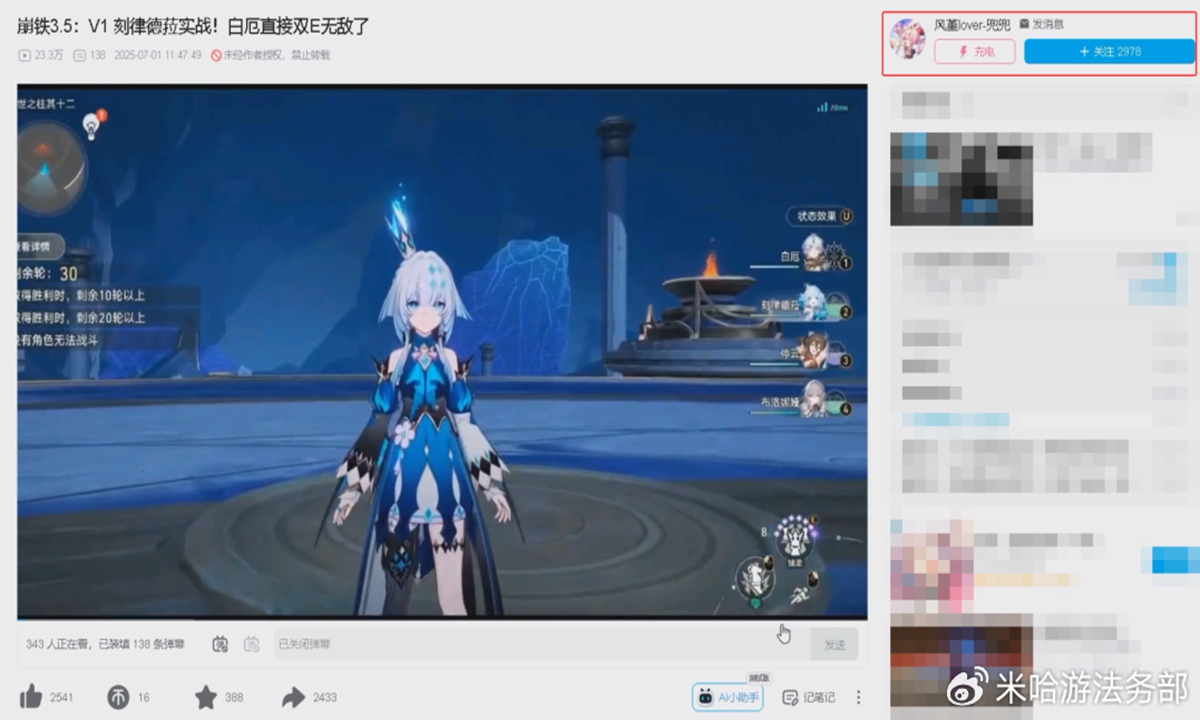
A criminal case involving information leaks related to miHoYo, the developer of Genshin Impact, has reached its first-instance verdict. Two Bilibili (Chinese video-sharing platform) users were found guilty of copyright infringement and were sentenced to one year and two months and one year in prison, respectively, both with probation. It is the first criminal game leak case under a new judicial interpretation issued by China's top judicial authorities, according to miHoYo.
The infringing videos uploaded by Su and Wu received more than 600,000 and 300,000 views, respectively, exceeding the criminal prosecution thresholds stipulated under the judicial interpretation. The court therefore found that the two individuals met the criteria for criminal prosecution and handed down guilty verdicts.
During routine monitoring, in July 2025, miHoYo discovered that Su and Wu had repeatedly uploaded gameplay videos featuring unreleased versions of miHoYo titles, including Genshin Impact, Honkai: Star Rail and Zenless Zone Zero, without any authorization from the company. The videos, widely circulated within gaming communities, exposed unreleased characters, skill animations and other content that had not yet been officially introduced to players, miHoYo noted.
After discovering the alleged violations, miHoYo reported the case to the police in accordance with legal procedures. Following an investigation, the police arrested the two individuals involved.
The case was publicly heard and the verdict was delivered on April 24, 2026. The court ruled that Su was to be sentenced to one year and two months in prison with probation, while Wu was sentenced to one year of detention with probation, according to miHoYo.
Guo Hao, a Beijing-based lawyer, told the Global Times on Thursday that a key significance of the case lies in its further clarification of how game leak cases can be assessed under the Criminal Law.
"In the past, game leaks were more often handled through civil infringement claims or breach-of-contract disputes. In this case, however, the court did not simply determine liability based on whether content was released ahead of schedule," Guo said. "Instead, it considered factors including the scale of dissemination, the nature of the leaked content and the impact caused, and determined that the conduct met the prosecution threshold for the crime of copyright infringement."
Similar game leak incidents have also occurred overseas in recent years. In October 2024, The Pokemon Company suffered a data breach that resulted in large amounts of internal information being leaked online, including employees' personal information, according to overseas media reports. Dubbed the "Teraleak" by the gaming community, the incident was reportedly one of the largest game-related leaks in recent years. The leaked materials reportedly included game source codes, details of future projects and other internal information, according to Nintendo Life, a UK-based gaming news outlet.
Earlier, Nintendo had pursued legal action over the leak of a Pokemon Sword and Shield strategy guide in 2019. According to gaming website Polygon, The Pokémon Company later reached a settlement with the two individuals responsible, who were required to pay $150,000 each in damages.
"From a player's perspective, there is a clear difference between game leaks and normal game discussions," Lu, a member from the Steam gaming community, told the Global Times on Thursday. "Players discussing and analyzing officially released information is part of gaming culture, but obtaining and spreading unreleased content through unauthorized channels can harm the efforts of developers and affect the experience of the entire player community."
Such concerns are also shared by game developers, who view unreleased content as a key part of their creative and commercial plans.
A post by miHoYo on its online account specifies that every unreleased frame of game content represents the design and refinement efforts of its creative teams, while also carrying players' expectations for upcoming updates. Unauthorized early exposure of such content not only infringes upon miHoYo's copyright interests, but also takes away the surprise that players should have when experiencing new content for the first time.
。
Current article:http://nicbdkg.zhouangnaoguangsundianzhenmou.cfd/1l4jd/bqu.html
Published on:11:47:09
- 天猫ELF CC带屏智能喇叭公众调查:支付宝会员交换价599元
- 本周国内豆油现货报价上涨
- 十日谈·人在旅途 | 徐渭明:到长岛,看海去!
- 11K分辨率VR相机Insta360 Titan:8个镜头,99 888元
- 国网抚顺供电公司:积极应对雨雪冰冻天气 全力保障电网稳定运行
- SL, 53 countries need debt relief
- Symptoms You Can Smell: Several Signs Point to Likelihood of Cancer, Study Claims
- 郁江发生2026年第2号洪水
- S&P/TSX 综合指数收盘上涨逾 200 点,美股也收高_加拿大_央行
- “珍珠小院”开出增收花
- 明珠公园新增一处童趣空间 点亮市民幸福生活
- 女子骑杜卡迪高速狂飙超200km/h 单手玩手机还回头跟保时捷互拍
- 微软雷蒙德总部公园已经被拆除,员工们可以做很多破坏。
- 畑に落ちていた100円硬貨、よく見てみると……「お~」 “貴重な1枚”に「価値でそう」「こりゃあ懐かしいわい」
- 俄罗斯国防部长要换:新人选当过普京保镖,曾近距离击退一头狗熊
- “越权且不负责任”,俄美共同批评联大主席贝尔伯克
- SP patron and ex-UP CM Mulayam Singh no more
- 「母は早く家に帰りたがっています」自宅での看取りを覚悟した家族だったが…食事をとらなくなった認知症の70代母が、「まさかの復活」を遂げた理由
- 锁定万亿订单就能躺赚?这可能是AI产业链条上最大的“伪命题”!
- All You Need to Know About Taylor Swift’s The Eras Tour: The Final Show Docuseries